Special Lecture – The Application of Technology in Policing — UK Scholar Michael Rowe

publish date :
2025-08-15
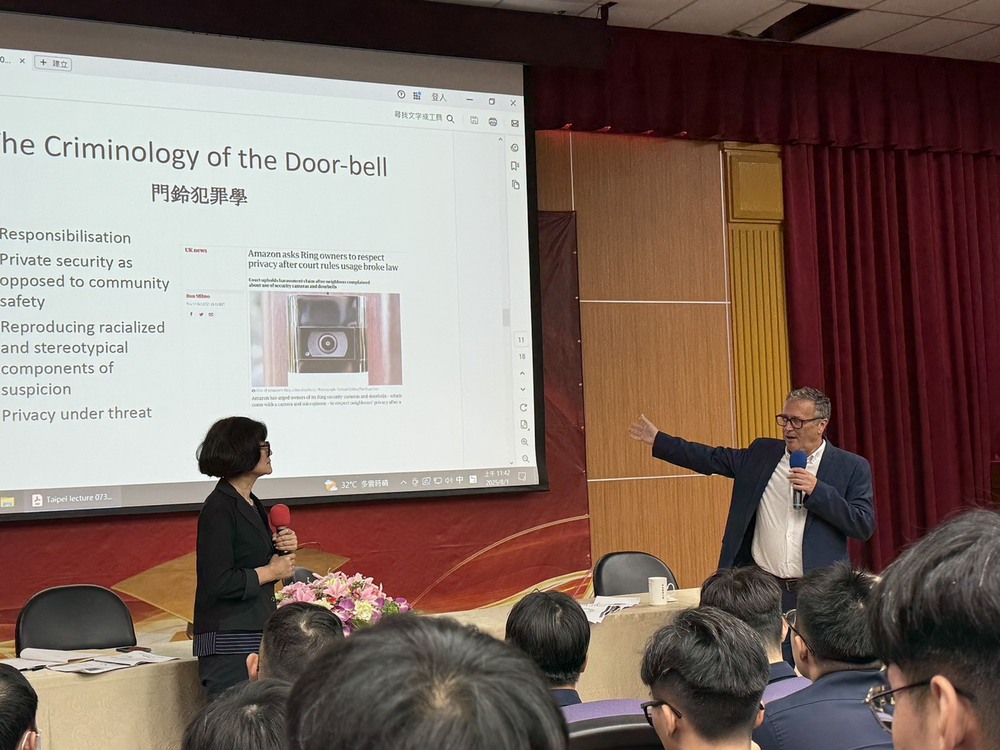
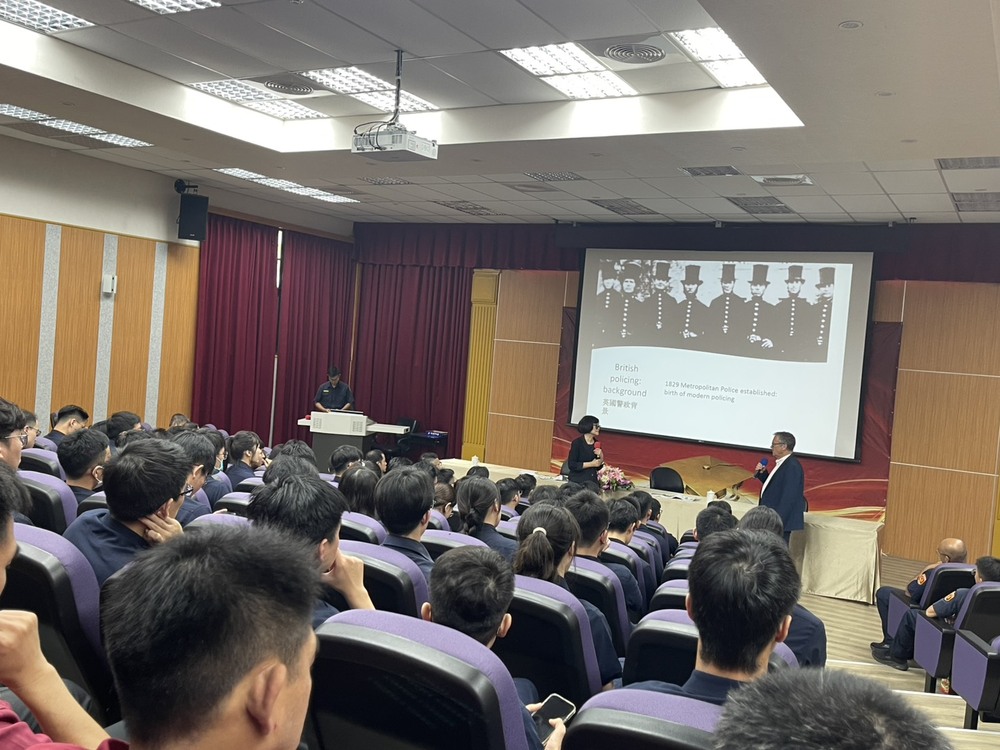
On the morning of August 1, 2025, our university invited Professor Michael Rowe, a criminology scholar from Northumbria University, UK, to deliver a special lecture titled “Policing and Technology: Strategic Potential and Everyday Application” (Chinese translation: The Application of Technology in Policing, with a Discussion on UK Policing). The event drew over one hundred faculty members and students, filling the venue to capacity and generating enthusiastic responses.
Professor Rowe began by outlining the evolution of the British policing system, illustrating how police organizations have transformed under the pressures of multiple crises and technological challenges. From closed-circuit television (CCTV) and body-worn video (BWV) to drones, autonomous vehicles, and crime hotspot mapping, technology has become deeply integrated into everyday policing, exerting a profound influence on public safety.
He cautioned attendees against placing excessive expectations on technology. Using the Metropolitan Police’s gang database as an example, he demonstrated that while technological surveillance can improve evidence collection and enhance accountability in police conduct, it also raises concerns over privacy and racial bias. Rowe stressed that the application of technology in policing must undergo careful ethical, privacy, and legal scrutiny, while maintaining community trust and healthy police–public relations.
In closing, Professor Rowe encouraged participants to reflect on ways to improve local systems through insights from international experiences, and to engage in cross-disciplinary collaboration to determine the optimal role of technology in police reform.
Professor Rowe began by outlining the evolution of the British policing system, illustrating how police organizations have transformed under the pressures of multiple crises and technological challenges. From closed-circuit television (CCTV) and body-worn video (BWV) to drones, autonomous vehicles, and crime hotspot mapping, technology has become deeply integrated into everyday policing, exerting a profound influence on public safety.
He cautioned attendees against placing excessive expectations on technology. Using the Metropolitan Police’s gang database as an example, he demonstrated that while technological surveillance can improve evidence collection and enhance accountability in police conduct, it also raises concerns over privacy and racial bias. Rowe stressed that the application of technology in policing must undergo careful ethical, privacy, and legal scrutiny, while maintaining community trust and healthy police–public relations.
In closing, Professor Rowe encouraged participants to reflect on ways to improve local systems through insights from international experiences, and to engage in cross-disciplinary collaboration to determine the optimal role of technology in police reform.